
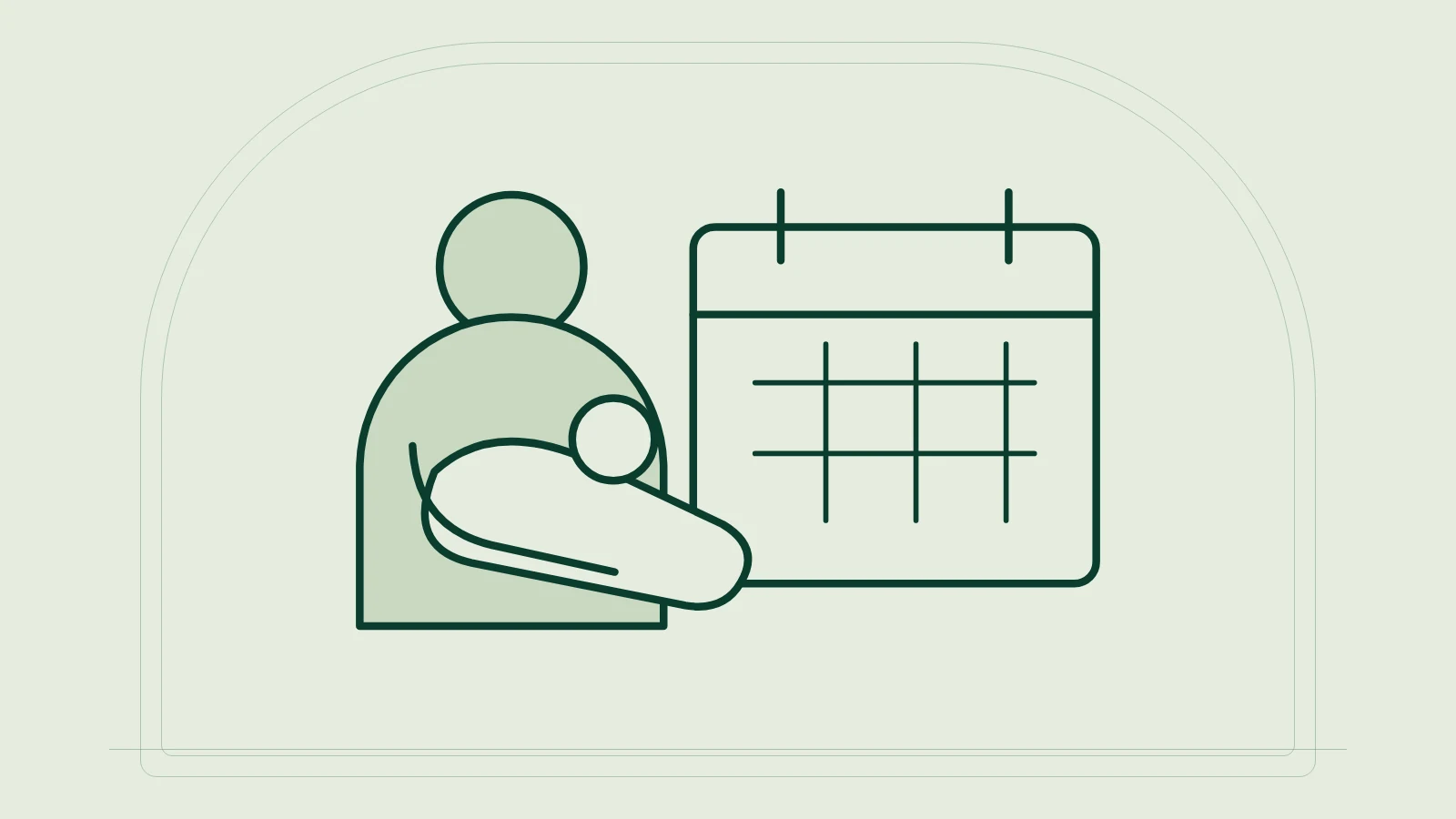
Maternity leave is one of the provisions most changed by the recent Labor Law amendments — and one of the most widely misstated online, where outdated figures still circulate. This page sets out the rules currently in force as documented by the Ministry of Human Resources and Social Development: the leave duration, how it is distributed, the extension option, and the scope of dismissal protection. This is general legal information, not legal advice for a specific case.
What changed in the 2025 amendments
The governing text is the Labor Law issued by Royal Decree M/51, as amended by Royal Decree M/44 of 1446H, effective 19 February 2025. The key points for female employees:
- Maternity leave is now 12 weeks at full pay. Any article stating 10 weeks reflects a previous version of the law and is out of date.
- Six weeks are mandatory after childbirth — neither the employee nor the employer can reduce them.
- The other six weeks are flexible: the employee distributes them as she needs, and they may start no more than four weeks before the expected delivery date.
- The leave may be extended by one additional month without pay after the paid period ends.
How the twelve weeks are distributed
| Element | Rule after the 2025 amendments |
|---|---|
| Total duration | 12 weeks at full pay |
| Mandatory portion | 6 weeks after childbirth |
| Flexible portion | 6 weeks distributed by the employee, starting no more than 4 weeks before the expected delivery date |
| Extension | One additional month without pay, at the employee's request |
An illustration: an employee chooses to start her leave two weeks before the expected delivery date. She uses two flexible weeks before the birth, then the six mandatory weeks after it, leaving four flexible weeks to use afterwards — twelve fully paid weeks in total.
Dismissal protection during pregnancy and maternity leave
The law protects the employment relationship itself, not just the leave:
- The employer is prohibited from dismissing the employee during pregnancy or maternity leave.
- Warning her of dismissal is equally prohibited during these periods — the protection covers the warning, not only the dismissal itself.
- The protection extends to any period of illness arising from pregnancy or childbirth, subject to the medical conditions and periods set by the law.
Where a dispute arises over a dismissal or a dismissal warning during these periods, the statutory path is a labor complaint through the Qiwa platform, then the Labor Court if settlement fails; the court examines the facts and documents of each case.
Maternity leave and the end-of-service benefit
A complementary rule many employees miss: Article 87 of the Labor Law preserves the full end-of-service award for an employee who resigns within three months of childbirth, without the reduced resignation fractions that normally apply. To estimate the award for a given tenure and wage, see the end-of-service calculator; for the rest of the employment rules, see the labor section.
When do you need a licensed lawyer?
The rules above describe the general framework, but some situations turn on case-specific facts and documents, including:
- A dismissal or dismissal warning that actually occurred during pregnancy or maternity leave, requiring an assessment of remedies and the litigation path.
- A dispute over how pay during the leave was calculated, or deductions applied to it.
- Illness arising from pregnancy or childbirth where the parties disagree on the medical conditions or statutory periods.
- Maternity leave overlapping with the expiry of a fixed-term contract or a restructuring at the employer.
In these cases, consulting a licensed lawyer or an accredited labor advisor is the appropriate step before taking any formal action.
 Employee Rights in Saudi Arabia After the 2025 Labor Law Amendments
 Article 77: Compensation for Unlawful Termination
 Article 80: Dismissal Without Award or Notice